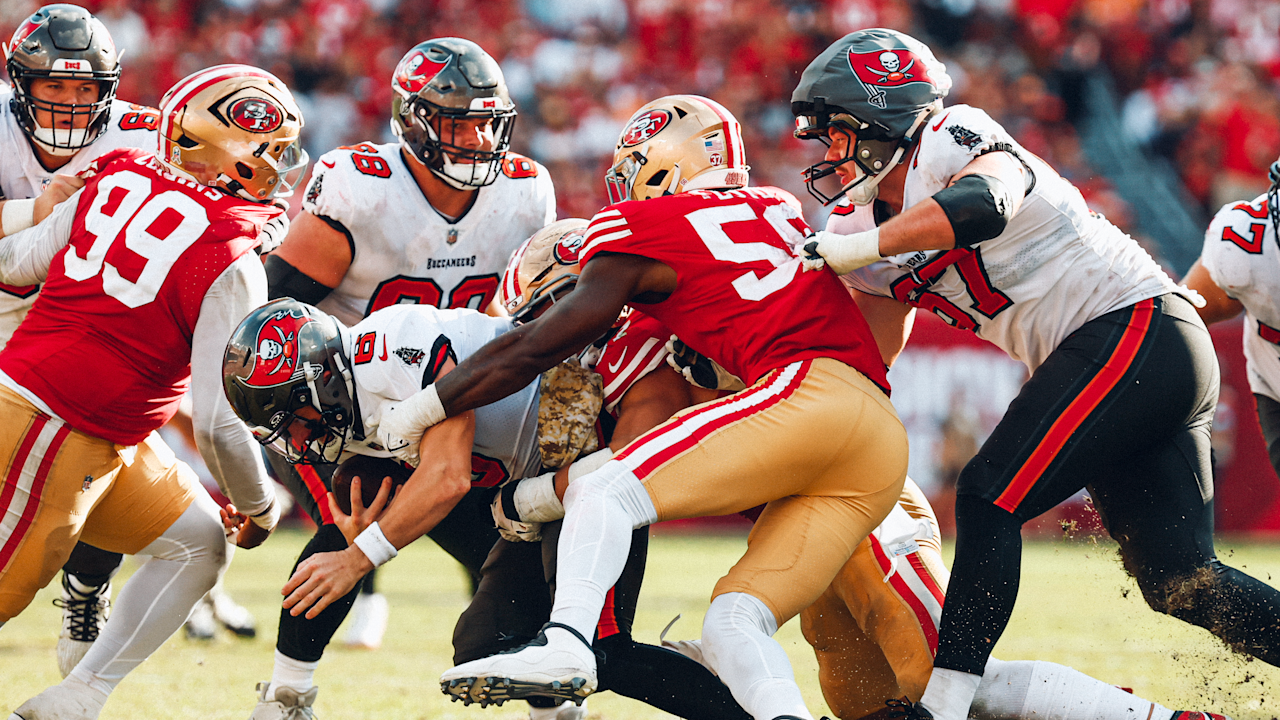
The clash between the San Francisco 49ers vs Tampa Bay Buccaneers Match Player Stats and the Tampa Bay Buccaneers is always a spectacle, showcasing some of the best talent in the NFL. Beyond the excitement of the game, the player stats offer a deep insight into the strategies, strengths, and weaknesses of both teams. In this article, we’ll dive into the detailed player performances from this matchup, highlighting key contributors, surprises, and areas of dominance.
Quarterback Performances: Leadership on the Field
The quarterback is often the most critical position in football, orchestrating plays and making split-second decisions. In this matchup, the 49ers relied heavily on their quarterback to navigate Tampa Bay’s formidable defense. Their quarterback demonstrated precision, completing a significant percentage of passes while minimizing turnovers. Notably, several short passes and strategic runs showcased his ability to adapt to Tampa Bay’s defensive schemes, emphasizing his dual-threat capability.
On the other hand, Tampa Bay’s quarterback delivered a mix of explosive plays and tactical ball distribution. While facing a stout 49ers pass rush, he managed to keep his composure and make crucial throws under pressure. His completion rate and passing yards reflected a balance of risk and reward, especially on third-down situations where every yard counted. Leadership was evident, as he rallied the Buccaneers’ offensive line to create opportunities against a relentless San Francisco defense.
Additionally, both quarterbacks contributed to the game beyond just passing. Scrambles, occasional runs, and even decision-making on trick plays highlighted their overall influence on the field. While stats provide numbers, the true measure was in how they maintained tempo and momentum, keeping fans on edge throughout the game.
Running Backs: Ground Game Dominance
Running backs for both teams played pivotal roles in controlling the clock and sustaining drives. For the 49ers, their lead running back exhibited explosive bursts and consistent yardage gains, forcing Tampa Bay defenders to adjust constantly. His combination of vision, speed, and agility turned seemingly routine plays into critical first downs, keeping the offense balanced and unpredictable. Additionally, his contributions in the receiving game added a multi-dimensional threat that the Buccaneers had to respect.
The Buccaneers’ running backs, meanwhile, showcased resilience against one of the league’s top run defenses. While the 49ers’ defensive line was aggressive in stopping the run, Tampa Bay found creative ways to leverage misdirection and quick handoffs, accumulating significant yardage over the course of the game. Their ability to gain crucial yards in short-yardage situations proved essential for sustaining drives and controlling the pace.
Both teams also leaned on their running backs for pass protection, demonstrating versatility and discipline. These dual roles—ball carrying and blocking—highlight the integral part running backs played in shaping the overall outcome. Their performances were reflected not just in rushing yards, but in maintaining offensive rhythm and giving quarterbacks the time needed to execute key plays.
Wide Receivers and Tight Ends: Impact Through the Air
The receiving corps for both teams provided the highlight-reel plays that kept fans buzzing. San Francisco’s wide receivers displayed excellent route running, catching under tight coverage, and creating separation in critical moments. Their ability to secure contested catches and convert third downs allowed the 49ers to maintain drives and capitalize on scoring opportunities. The synergy between quarterback and receivers was evident, with timing and trust playing a key role in successful completions.
Tampa Bay’s wideouts, on the other hand, leveraged speed and size mismatches against the 49ers’ secondary. Deep routes, sideline catches, and tactical use of the field stretched the defense, opening lanes for both passing and running plays. Tight ends on both squads were also central to short-yardage and red-zone success. Their dual capability to block effectively and serve as reliable receiving targets added versatility to offensive schemes, often tipping the balance in critical situations.
Beyond yardage, the impact of receivers and tight ends extended to momentum shifts. A single key reception, conversion, or touchdown changed defensive alignments, forced adjustments, and created opportunities for follow-up plays. In this game, the receiving units demonstrated the fine line between tactical execution and game-changing athleticism.
Defensive Standouts: Stopping the Opponent
Defensive player 49ers vs Tampa Bay Buccaneers Match Player Stats are crucial to understanding how a team controls the pace and limits scoring. San Francisco’s defensive line showcased aggression, disrupting Tampa Bay’s backfield and pressuring the quarterback effectively. Tackles for loss, sacks, and quarterback hurries reflected the 49ers’ ability to dominate the line of scrimmage and force errors. Linebackers and defensive backs contributed with strategic coverage, pass deflections, and critical interceptions, highlighting a well-rounded defensive performance.
Tampa Bay’s defense, known for its opportunistic play, also made its mark. Key sacks, tackles, and forced turnovers demonstrated their commitment to disrupting the 49ers’ offensive rhythm. Cornerbacks and safeties capitalized on misreads and coverage lapses, securing valuable turnovers and swing moments. These defensive contributions proved critical in high-pressure situations, often determining possession and momentum shifts.
Special teams also played a subtle yet vital role in defensive statistics. Punts, kick coverage, and returns affected field positioning, indirectly influencing defensive success. Both teams demonstrated how cohesive defensive play, coupled with situational awareness, can tilt the balance of a tightly contested matchup.
Special Teams and Miscellaneous Contributions
While offense and defense dominate attention, special teams cannot be overlooked. Field goals, extra points, punts, and kick returns often decide tight games. The 49ers’ kicker displayed consistency, converting crucial field goals under pressure. Punt coverage and returns showcased disciplined execution, impacting field positioning in subtle but significant ways.
Tampa Bay’s special teams mirrored this reliability, making key field goals and achieving advantageous kickoff returns. These contributions often set up the offense with manageable distances, enhancing scoring potential and maintaining momentum. Moreover, penalties, third-down conversions, and time-of-possession stats offered deeper insight into team discipline and strategy execution.
Analyzing these additional statistics paints a holistic picture of the game. Beyond highlight plays, these “supporting stats” provide context for the flow, strategy, and ultimate outcome of the matchup between the 49ers and Buccaneers.
Conclusion: Key Takeaways from the Player Stats
The 49ers vs Tampa Bay Buccaneers matchup was a showcase of talent, strategy, and execution. Player stats reveal that the game was not merely about who scored more points, but about tactical decisions, individual contributions, and team cohesion. Quarterbacks orchestrated drives, running backs maintained offensive balance, receivers created explosive opportunities, and defenses fought relentlessly to control momentum.
Ultimately, the statistics highlight both individual brilliance and collective effort. Fans and analysts can glean deeper insights into how matchups unfold, the effectiveness of strategic choices, and which players rose to the occasion. As both teams continue their seasons, the lessons from this game, reflected in these stats, will inform adjustments, game plans, and player development.
The 49ers vs Buccaneers encounter is a testament to the intricate, multi-layered nature of NFL football—where numbers tell stories as compelling as the plays themselves.



Leave a Reply