How to Eat Chia Seeds in Real Life (Easy, Tasty, No Stress)
Chia seeds look tiny, yet they change food in a big way. They soak up liquid and turn soft, thick, and smooth. That can feel strange the first time, but it becomes normal fast once you know the right method. This guide keeps things simple and practical. You’ll see safe portions, quick prep, and everyday ideas that fit busy mornings and relaxed weekends. You’ll also get real tips that avoid clumps, avoid tummy trouble, and keep the taste clean. If your goal is a better breakfast, a smarter snack, or a steady routine, these steps make it easy to stick with chia.
What Chia Seeds Are and Why People Add Them
Chia seeds come from a plant called Salvia hispanica. In the kitchen, they act like a natural thickener. When mixed with water, milk, or yogurt, they swell and form a gentle gel. That gel can make food feel creamy without heavy ingredients. Many people also like chia because it adds fiber, plant protein, and plant omega-3 fats. The taste is mild, so it doesn’t fight your recipe. It fits with common meals like oatmeal, smoothies, yogurt cups, and even soups. If you want one small ingredient that can upgrade texture and make meals feel more filling, chia seeds can be a smart choice.
Safe Rules That Prevent Discomfort
If you are new to chia, start small and build up slowly. Chia holds a lot of liquid, so a big jump can feel heavy in your stomach. Some people notice gas or bloating when they go from zero to a full serving in one day. A simple plan works best. Start with 1 teaspoon daily for a few days, then move to 1 tablespoon. Many adults feel good at 1–2 tablespoons per day. Drink water through the day because fiber works best with fluids. Also avoid swallowing dry chia by the spoon. Mix it into wet foods or soak it first. These steps keep chia comfortable and easy to enjoy.
Beginner Start
Use 1 teaspoon daily, then increase slowly. Your stomach adapts better with calm steps.
Hydration Tip
Drink water across the day. Chia fiber feels best when your body has enough fluid.
Daily Amount Guide (Simple Portions)
Portion size matters because chia is small and easy to overdo. A common daily range for many adults is 1 to 2 tablespoons. If you are just starting, 1 teaspoon is a smart first step. If your meals already include lots of beans, oats, vegetables, and fruit, you may feel better with less chia. For kids, a smaller amount often works well, like 1–2 teaspoons mixed into yogurt or oatmeal. If you have trouble swallowing, avoid dry chia. If you have medical concerns or take certain medicines, personal advice from a clinician can be helpful. For most people, steady portions and enough water make chia simple to use.
| Person | Starter Amount | Comfort Range | Best Pairing |
|---|---|---|---|
| New to chia | 1 teaspoon | 1 tablespoon | Yogurt or water |
| Most adults | 1 tablespoon | 1–2 tablespoons | Oatmeal, smoothies |
| Kids (with care) | 1 teaspoon | 1–2 teaspoons | Oatmeal, pudding |
Raw Chia: Quick Ways That Still Taste Good
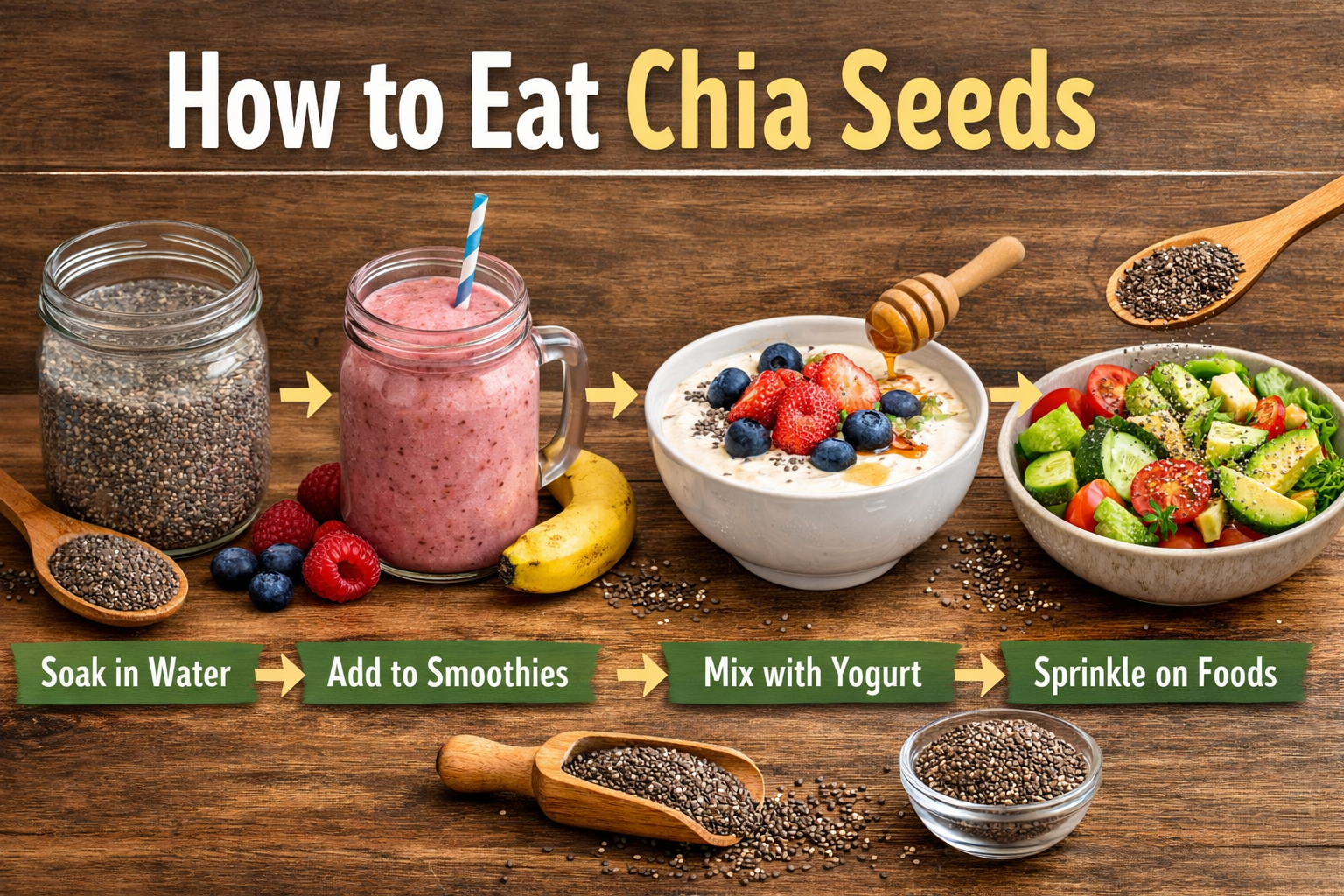
Yes, you can eat chia seeds raw. The trick is to mix them into wet foods so they don’t feel dry. Stir 1 teaspoon into yogurt and let it sit for a few minutes. Add them to peanut butter toast, then top with banana slices. Mix them into cottage cheese with a little honey. Sprinkle a small amount into salad dressing and shake hard, then pour right away. If you eat chia raw, take sips of water with your meal. This keeps the texture comfortable. Raw chia also works in baking, like pancakes and muffins, because the batter is already wet. These are easy, real-life ways to keep chia in your routine without extra steps.
Chia in Water: The Simplest Starter Drink
A chia water mix is one of the easiest methods. Add 1 tablespoon chia to a large glass, then pour in 10–12 ounces of water. Stir fast for 20 seconds, wait 5 minutes, then stir again to break clumps. After 15–20 minutes it becomes thicker. Add lemon or lime for a clean taste. If you like a light sweet flavor, add a small drizzle of maple syrup. Some people prefer shaking it in a bottle with a lid because it reduces clumps. Drink it slowly, then drink plain water later. If the gel texture feels strange, use less chia at first and build up over time.
Clump Fix
Stir twice: once at the start, once after 5 minutes. That small step makes it smooth.
Flavor Boost
Lemon, lime, or a tiny pinch of cinnamon can make chia water feel fresher.
Texture Control
Use less chia for a lighter drink. Use more chia for a thicker gel feel.
Chia Pudding: No-Cook, Creamy, and Easy
Chia pudding feels like dessert but works well as breakfast. Use a simple ratio: 3 tablespoons chia to 1 cup milk. You can use dairy milk, oat milk, almond milk, or soy milk. Add 1–2 teaspoons honey or maple syrup and a pinch of cinnamon. Stir well, wait 10 minutes, then stir again so it doesn’t clump. Cover and chill for at least 2 hours, and overnight is even better. Top it with berries, banana slices, or granola. You can prep several jars at once and keep them in the fridge for fast mornings. If you want thinner pudding, add more milk. If you want thicker pudding, add more chia.
Smoothies and Shakes: Avoid the Slimy Surprise
Smoothies are a great way to use chia without noticing much texture. Add 1 teaspoon to 1 tablespoon chia into your blender with frozen berries, a banana, and milk or yogurt. Blend well. If you leave a smoothie sitting for long, chia can thicken it more than you expect. A helpful trick is to add chia near the end, blend, then blend again for 10 seconds right before drinking. You can also use pre-soaked chia. Soak chia in water for 15 minutes, then spoon the gel into the blender. That gives thickness without gritty bits. If you want extra protein, use Greek yogurt. If you want greens, add spinach. The taste stays mild and clean.
Oatmeal, Cereal, and Yogurt: Fast Breakfast Wins
Breakfast is the easiest place to build a chia habit. Stir 1 tablespoon chia into hot oatmeal after cooking, wait two minutes, then eat. It thickens the bowl and makes it feel more filling. For cold cereal, use a smaller amount, like 1 teaspoon, and eat right away so the cereal stays crisp. Yogurt is a top match. Mix chia into Greek yogurt with fruit, then let it sit 5–10 minutes for a smoother feel. If you pack lunch, add chia to a yogurt cup in the morning. By noon it turns into a thicker parfait. These quick methods fit busy mornings and still taste great.
Baking With Chia: Muffins, Pancakes, and More
Baking is an easy way to enjoy chia without thinking about gel texture. Add 1–2 tablespoons chia to muffin batter or banana bread. Stir it into pancake mix for a light crunch. Chia also works as a binder in egg-free baking. Make a “chia egg” by mixing 1 tablespoon chia with 3 tablespoons water, then wait 10–15 minutes until it becomes gel-like. Use it in place of one egg in many recipes like muffins and quick breads. For cakes that need lots of lift, chia may feel heavier, so keep it simple. For home baking, chia is a reliable pantry upgrade.
Savory Meals: Soups, Dressings, and Bowls
Chia is not only for sweet food. You can use it in savory meals too. Stir 1 teaspoon into soup to gently thicken the broth. Add chia to salad dressing, shake hard, then pour so it coats greens better. Sprinkle a small amount onto avocado toast with salt and pepper. Add chia to rice bowls or quinoa bowls for extra texture. You can even thicken sauces. Stir a pinch into marinara while it simmers for a richer feel. Start small so it doesn’t get too thick. Savory use is a great way to keep chia in your routine when you get bored of pudding and smoothies.
Fullness and Smart Snacking
Many people use chia to make meals feel more filling. The fiber and gel texture can slow eating and reduce random snack cravings later. A strong approach is using chia with protein. A simple snack is Greek yogurt with chia and berries. Another strong snack is chia pudding made with milk and topped with fruit. For breakfast, oatmeal with chia keeps you steady longer than a sugary pastry. Timing matters too. Many people feel best using chia at breakfast or lunch. Late-night heavy fiber can feel uncomfortable for some people. Keep portions simple, drink water, and pair chia with real foods like fruit, yogurt, oats, and nut butter for a balanced feel.
Digestion Support: What Works Better
Chia is rich in fiber, so it can support regular bathroom trips for many people. Water is the key. Fiber works best when your body has enough fluid. If you add chia but don’t drink water, you may feel more backed up. Start with 1 teaspoon daily, mixed into yogurt or water, and drink extra water across the day. Gentle movement also helps digestion. A short walk after meals can make a big difference. If your stomach is sensitive, try even less, like half a teaspoon, then build up slowly. Also notice what you eat with chia. If your meals already have lots of fiber, too much chia may cause gas. Balance is the winning move.
Common Mistakes and Easy Fixes
The most common mistake is taking too much too fast. That can cause gas, cramps, or bloating. Fix it by starting with a teaspoon and building up. Another mistake is eating chia dry. That can feel rough in the throat for some people. Fix it by soaking or mixing into wet foods. A third mistake is not stirring. Chia clumps if it sits. Fix it by stirring twice: once at the start, then after five minutes. Another mistake is expecting instant results. Chia supports habits, not magic. Fix it by using it daily in small amounts. The last mistake is forcing methods you don’t enjoy. Pick one method you actually like, then keep it simple. That is how chia becomes easy to stick with.
Nutrition Profile Table (Typical Serving)
This table is a simple snapshot for 2 tablespoons of chia seeds. Numbers can vary by brand, but the overall picture stays similar. Chia is known for fiber, plant fats, and minerals that many people don’t get enough of. Use this as a guide to understand why chia feels “small but powerful,” then focus on steady portions that feel good for your body and your meals. If you want a smoother start, use one tablespoon for a week, then move up. Keeping it steady beats doing a lot one day and nothing the next.
| Nutrient | What It Supports | Simple Note |
|---|---|---|
| Fiber | Digestion + fullness | Drink water for comfort |
| Plant omega-3 (ALA) | Heart support | Plant-based healthy fats |
| Protein | Daily strength | Pair with yogurt or milk |
| Minerals | Bones + muscles | Helpful in many diets |
Biography Table (Origin, Story, Food Identity)
This “biography” table gives a clear identity to chia seeds. It explains what they are, where they come from, and why they show up in so many kitchens. The big reason is simple: chia is mild in taste, shelf-stable, and works in many recipes. It also creates a unique gel texture that can make food feel creamy without extra effort. If you keep one jar of chia at home, you can use it in breakfast, snacks, and even savory meals. That flexibility makes chia easy to keep in your routine for the long run.
| Bio Detail | Chia Snapshot |
|---|---|
| Common Name | Chia seeds |
| Plant Name | Salvia hispanica |
| Origin Region | Central America |
| Taste | Mild and neutral |
| Texture in Liquid | Turns gel-like when soaked |
| Common Uses | Pudding, smoothies, oatmeal, yogurt |
Profile Table (Quick Buyer Guide)
Not all chia feels the same. Some brands clump less, and some taste fresher. This profile table helps you pick a clean, reliable chia product without overthinking it. The goal is simple: seeds that smell mild, feel dry, and stay fresh in a sealed bag or jar. Storage matters too. Keep chia in a cool, dry place and close the package tight after use. If you see moisture inside, avoid it. A fresh chia product makes the texture smoother and the experience better, especially if you are making chia pudding or chia water.
| Check | What to Look For | Quick Tip |
|---|---|---|
| Smell | Clean, mild scent | Strong odor can mean stale |
| Texture | Dry, not damp | Damp seeds spoil faster |
| Package | Resealable bag or jar | Helps keep it fresh |
| Label | Plain chia seeds | Milled chia behaves differently |
| Storage | Cool, dry place | Close the lid after each use |
3-Day Simple Meal Plan (Easy Routine)
A routine makes chia feel effortless. Day 1: breakfast is oatmeal with one tablespoon chia and blueberries. Lunch is a sandwich and a yogurt cup with one teaspoon chia mixed in. Snack is apple slices with peanut butter. Dinner is a rice bowl with chicken and beans, plus a light sprinkle of chia. Day 2: breakfast is a smoothie with chia, banana, and milk. Lunch is a salad with chia dressing. Snack is a chia pudding jar. Dinner is soup with a small chia stir-in and whole-grain bread. Day 3: breakfast is Greek yogurt with honey, chia, and granola. Lunch is leftovers. Snack is chia water with lemon. Dinner is pasta with a thicker sauce and a tiny chia stir. Keep portions steady and drink water.
FAQs
How do beginners eat chia seeds without stomach pain?
Start with one teaspoon daily and mix it into yogurt or water. Drink water through the day. Increase slowly over a week. This gives your stomach time to adjust, and the fiber feels much more comfortable.
Can I eat chia seeds raw every day?
Yes, many people do. The best approach is mixing chia into wet foods like yogurt, oatmeal, or smoothies. Avoid swallowing a large spoon of dry chia because it can feel rough and heavy.
What is the easiest morning method?
Stir one tablespoon into oatmeal or Greek yogurt. Let it sit five to ten minutes. Add fruit. It takes almost no extra time and works well on busy mornings.
How long should chia soak before eating?
A quick soak is fifteen to twenty minutes. For chia pudding, chill it for at least two hours, and overnight is even better. Stir twice to stop clumps and keep the texture smooth.
How much chia should I eat per day?
Many adults do well with one to two tablespoons daily. If you are new, start with one teaspoon and build up. Your comfort and hydration matter more than pushing a high amount.
Can chia support digestion?
Chia fiber can support regular bathroom trips for many people, but water matters a lot. Start small, drink enough water, and keep your meals balanced. If a serious issue continues, personal medical advice can be helpful.
Ready to Keep It Simple?
Pick one method you actually enjoy. Start with a small portion for a few days. Keep water intake steady. If you want the easiest path, go with yogurt plus chia for a full week. If you want the tastiest path, prep two chia pudding jars at night. The best method is the one you can repeat without stress.
How to Eat Chia SeedsYou may also like to read About: How to Eat Chia Seeds





Leave a Reply